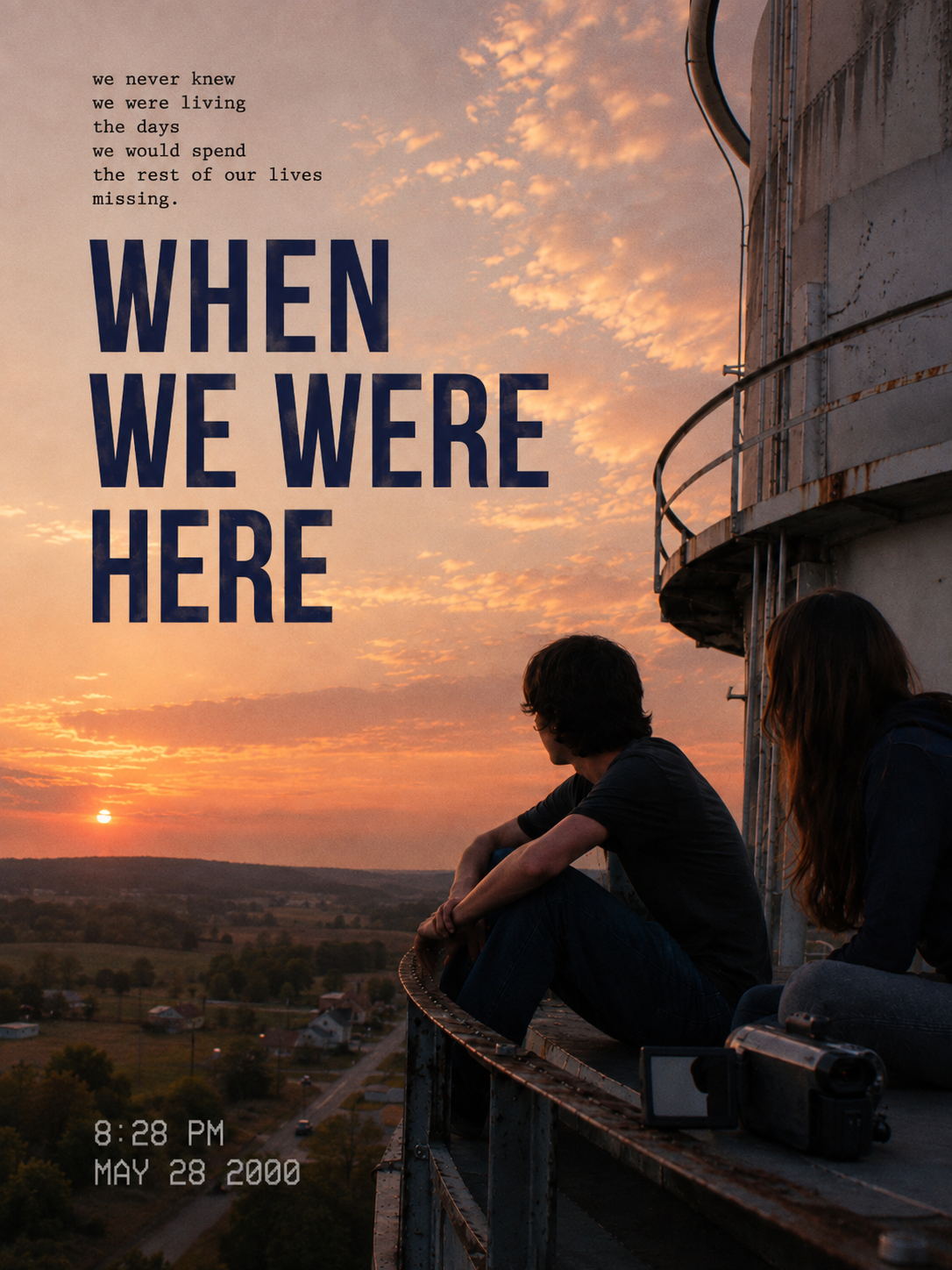
Completed Screenplay · Feature
When We Were Here
Written by Scott Burton
In the summer of 2002, four friends try to preserve the last season before adulthood begins pulling them apart, while one girl’s camera turns ordinary nights into the evidence they will one day need to remember who they were.
About the Screenplay
The summer you do not know is ending until it already has.
Winston-Salem, North Carolina. Summer 2002. Alex Parker is seventeen and filming everything she can hold onto: her friends, the town, late-night parking lots, the record store that helped define their lives, and the ordinary moments nobody realizes are becoming memories.
Around her, Tyler Reed, Emily Vale and Josh Martin are beginning to face the futures waiting beyond summer. As familiar places change and departures move closer, Alex’s camera stops simply documenting where they are and begins revealing who they are becoming. When We Were Here is a coming-of-age drama about friendship, first love, memory, leaving, and the places that become part of us before we understand they can disappear.
The Story
What we keep. What we lose. What remembers us anyway.
Memory
Alex records the summer because she is afraid that ordinary moments will disappear before anyone understands what they meant.
Leaving
Friends, families and familiar places begin moving in different directions, forcing each character to decide whether staying is a choice or a hiding place.
Evidence
MiniDV tapes, photographs and the documentary itself become attempts to prove that a place, a friendship and a version of a life really existed.
Project
Screenplay details
- Written by
- Scott Burton
- Format
- Feature Screenplay
- Genre
- Coming-of-Age Drama
- Status
- Completed
- Setting
- Winston-Salem, North Carolina
- Time Period
- Summer 2002
- Screenplay Year
- 2026
- Story Focus
- Friendship · Memory · Leaving · First Love
Creative Approach
Memory recorded before anyone knows what it will mean.
The screenplay is built around the tactile language of summer 2002: MiniDV footage, disposable photographs, AIM messages, burned CDs, record stores, parking lots and places that feel permanent only because the people inside them are still young enough to believe they are.
The camera inside the story is more than a period detail. It becomes a way of asking what photographs and recordings can actually preserve. They may document what happened, but the emotional truth of a memory still belongs to the people carrying it.
“Maybe they tell you what happened. Maybe they don’t tell you what mattered.”